“At the very co…

“At the very core of RIM – at its DNA – is the innovation. We always think ahead. We always think forward. We sometimes think the unthinkable.”

This was a quote by the current CEO of RIM, Thorsten Heins.  I wonder if he regrets these words.  They were outpaced and outmatched by Apple, Android and even to an extent Microsoft.  I wonder if they had played nice, where they would be now.


We’ll see how people take to the new 10 series of phones.

Why Microsoft doesn’t care about the MDM race

Activesync

Lately I’ve been asked plenty of questions about the MDM sector, but it seems to be one overwhelming question that everyone seems to ask..

Why doesn’t Microsoft come out with an MDM solution?

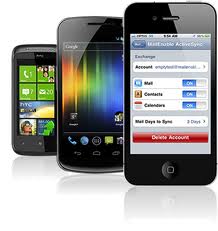
Generally I tell people that the MDM push is just helping Microsoft push the technology that they ultimately care about, ActiveSync.  If you look at all the MDM solutions, except for Good, they all get e-mail via ActiveSync.  Even BlackBerry with BES 10, makes all the new devices push through ActiveSync.  So the more MDM solutions, the more companies push ActiveSync, the more Microsoft sells Exchange license’s, Window’s license’s and keeping the Microsoft name prevalent .  I want to clarify, I still think that Microsoft wants to stay in the Mobile software/hardware game, see Windows Phone 8, however, having the most widely used application for e-mail is a nice side gig.  As long as everyone still uses Exchange as a back end, people will need mobile e-mail, and they will utilize ActiveSync until further notice.

Sometimes I wish Microsoft would just buy up 2 or 3 of the big MDM providers, because I feel some of the smaller companies are running sort of a Mickey Mouse operation

Where does MDM start and TEM end?

I’ve been working on trying to explain where mobile device management starts, and how companies use this service.  I figured this was a worthy blog topic, as it is something that until recently I got wrong.

First let me show this art picture I just made that will help clarify how I break down typical MDM/TEM

mdmtem1

TEM stands for telecom expense management, this is the process in which you provision the phone.  This is when you set up data, voice, make a phone selection (Android/BlackBerry/IPhone etc:)  Now some companies can handle this entire process, you basically let them pay the bill for you, and they will handle the entire procurement for you.  But that is when MDM ( in the traditional sense) begins.  MDM manages the user experience when they have the phone.  It is responsible for helping the user set up e-mail, get applications, set up security policies and monitor the device.  The advantage to having someone to both TEM and MDM is they can manage the entire life-cycle.  Customers are going to want someone who can make the entire point to point solution, they don’t want to have to deal with TEM people, or MDM people, they want to deal with mobility people.  I think once we figure out that piece of the puzzle, one company who can truly do it both, they will own the entire market.  Although some companies do this now, they are not known enough for it, and they do not do it on a constant enough basis.


Google announces partnership with SAP for Fiori

SAP_Sapphire


“We’re announcing a new relationship between SAP and Google, to help our products provide beautiful experiences to our users and to make our platforms work better for our developers,” said Singh at SAP’s Sapphire conference in Orlando this week.  Google is pushing the enterprise level application market hard, and this is just the next step in what it see’s as the evolution on Android enterprise solutions.  With BlackBerry 10 being the standard for HTML 5 applications right now, although not being picked up by…well anyone, it is interesting to see a huge player like Google set up a platform for HTML 5 development.

“SAP Fiori is a beautiful HTML5 platform to use to build apps from the ground up around users’ experiences that are optimized for Chrome. Chrome is the most secure, fast and modern browser on the internet,” he said. “As a consumer enterprise company we’ve found a great partner in SAP to bring the same kind of simplicity and beauty you have in the consumer world to applications for things like supply chain, finance and retail.”

Hey Apple,

What you got in store for us for HTML5?


Where have all the MDM providers gone?

sponsors1 sponsors2 Sponsors3

Looking at BlackBerry world news, I stumbled upon an interesting fact.  The sponsor list strangely had something missing.  This is an impressive list of sponsors, but once you drill down into the list, what is missing…

Where are all the MDM providers?  It seems that the only companies on this list that are MDM providers are Boxtone and Vox Mobile.   Those two companies are more BlackBerry centric then the others.  Now some companies have an MDM solution, like SAP, but they are hardly there for the MDM part of the business.   This leads me to one conclusion.

Either RIM told Mobile Iron, Airwatch, Zenprise and Tangoe MDM to stay away or those companies decided that they did not need to be seen at BlackBerry live.  Each of these scenario’s provides insight into what is going on in the battle for MDM.  The Gardner report on MDM is due soon, and we are going to see what has happen since last year’s report put Airwatch and MobileIron on top of the pile.

Where do we go from here?

image

Recently I have been in London working on teaching people from our other office about the power of mdm. It is fascinating to see how other cultures perceive how the mobile market is emerging . For example I had the pleasure of speaking to some executives from this office and I learned some interesting facts.

* most mobile enterprise phones in the UK are not smartphones
* most enterprise users carry two phones because tax issues make it impossible to do personal calls on your work phone
* BYOD has not taken off in the traditional sense. Data is so much more expensive over here that people commonly switch phones between carriers for voice and data. (some companies advertise on how easy it is, and design apps around it, even carriers!)
* mdm might have more play in the USA then England due to data rates.

The Q10

BlackBerry-Q-10
What we know
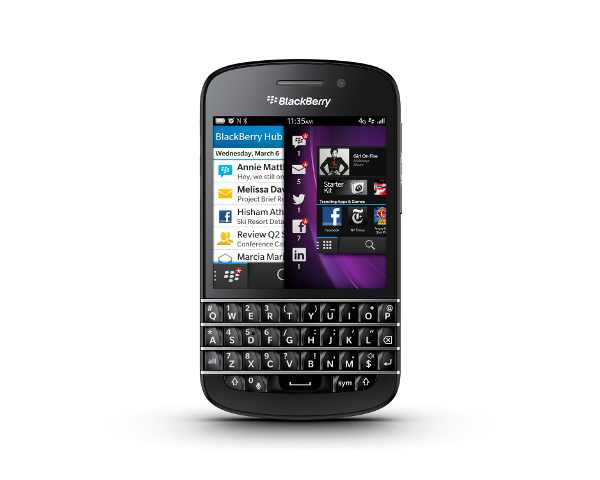
The device will launch with a 16GB model that will utilize a 3.1 inch touch display.  It will be a 4G device and use a 720×720 resolution.  This device will be a lower end model, think curve to bold.  It will record HD video in 1080p and have a battery standby time of 14.8 days and 13.5 talking time.  I don’t see the market that they are appealing to though.  IPhone have never really came to market with a cheap phone, just lowered prices on older models.  I’m not sure I agree with this marketing strategy though, I feel that they should push the higher end models, and give a price reduction on the z10, and then push a new high end phone.    This will launch BlackBerry OS 10.1. I will make another blog posts that go over the specifics of that upgrade.  I assume it will have a lessor processor then that of the z10.

BBM On Android And iOS Summer Of 2013

Good move by RIM.  I think anything to bring in cash to the company at this point, and to be more of a MDM player, is a good idea, and fine by me.

BES 10.1

Features leaked for BES 10.1 from RIM


Key features of BlackBerry Enterprise Service 10 version 10.1

--  Regulated-level EMM. BlackBerry Enterprise Service 10 version 10.1
    provides customers with an optional set of extended IT policy settings
    and controls that restricts the use of a BlackBerry 10 smartphone for
    work only (does not allow personal apps and content). 
--  Simplified deployment for a lower total cost of ownership. Following a
    simple installation process, customers will be able to use BlackBerry
    Enterprise Service 10 version 10.1 to manage BlackBerry 10 smartphones,
    BlackBerry(R) PlayBook(TM) tablets, iOS and Android devices, as well as
    earlier model BlackBerry smartphones. Upgrading to BlackBerry Enterprise
    Service 10 version 10.1 is simple and intuitive, and existing BlackBerry
    Enterprise Server 5 customers can quickly upgrade to BlackBerry
    Enterprise Service 10 version 10.1 with no firewall changes. 
--  Dashboard & reporting. New dashboard capabilities provide an "at-a-
    glance" graphical view of information and statistics associated with the
    customer's complete fleet of devices, providing administrators with
    immediate access to the information they need. The dashboard displays a
    high level overview of information such as a device deployment summary
    by platform and carrier, device compliance state, application
    deployments, and more.  
--  High Availability. All components of BlackBerry Enterprise Service 10
    can now be deployed in a highly available active/passive configuration,
    similar to the high availability support offered by BlackBerry
    Enterprise Server 5.0. It offers simple, easy to configure threshold
    settings and improved failover performance. 
--  BlackBerry Support is now included as standard. Care(ii) now comes as
    standard with BlackBerry Enterprise Service 10 deployments(iii),
    providing 12x5 telephone access to BlackBerry experts, responsive online
    support, access to training, productivity and diagnostic tools. Extended
    technical support offerings are available.