BlackBerry Fusion is BES10

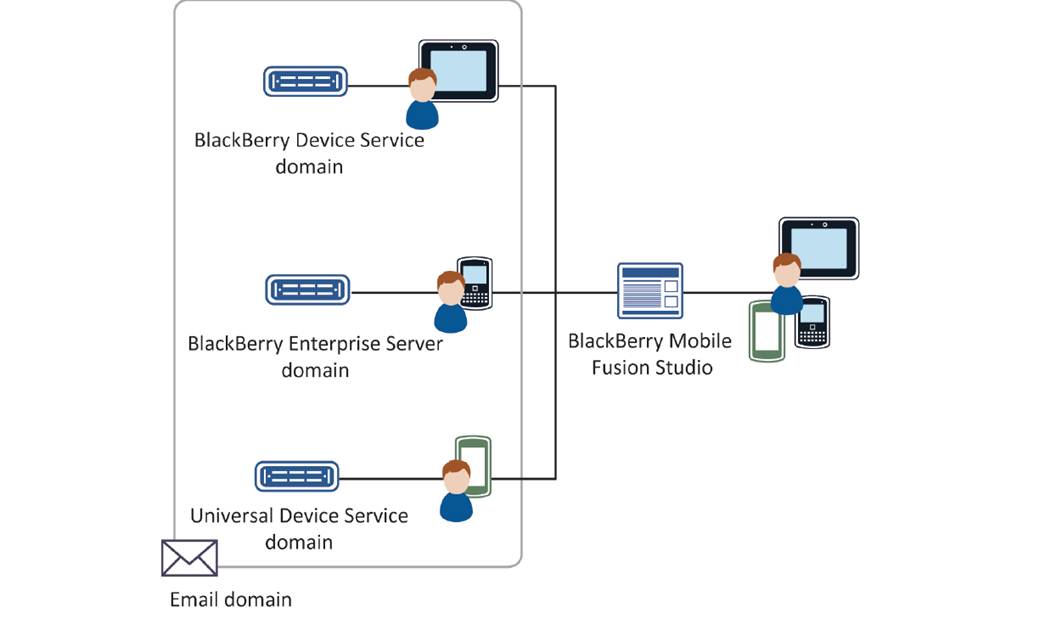
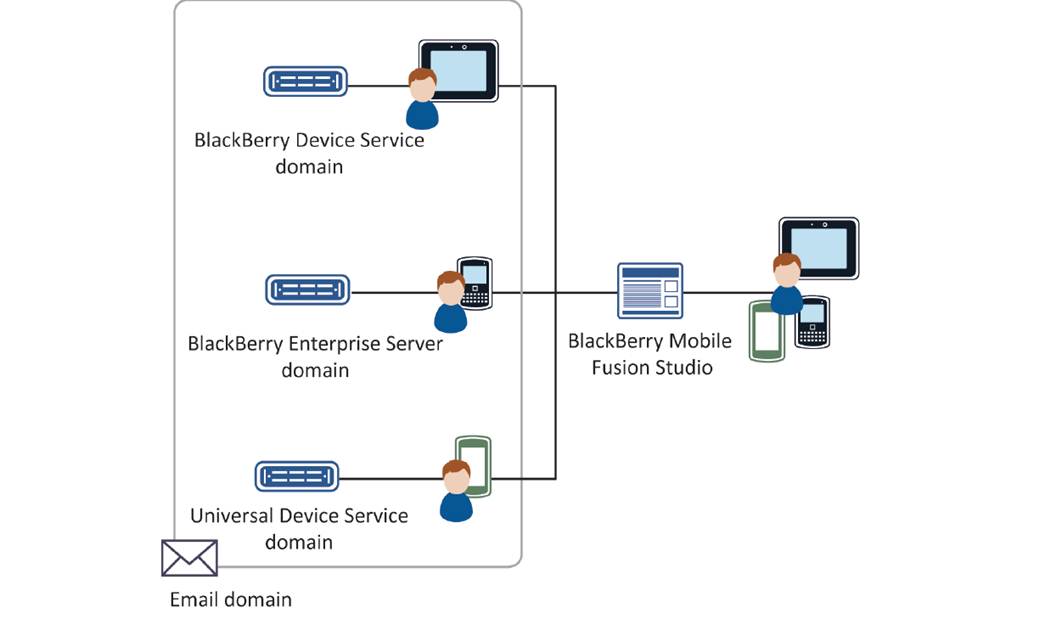
So lately I’ve heard a lot of talk about BES 10.  I did some research, and it looks like BES 10 is just mobile fusion with BES 5.4 built into it.  They are going to rename mobile fusion to BES10 to remove the confusion.  So in the future it is going to look something like this.

Image

Mobile Fusion

So lately I’ve heard a lot of talk about BES 10. I did some research, and it looks like BES 10 is just mobile fusion with BES 5.4 built into it. They are going to rename mobile fusion to BES10 to remove the confusion. So in the future it is going to look something like this.

First impressions of AirWatch

Well recently I’ve been playing with Airwatch, and I have to admit, I am very impressed with the product.  It is incredibly easy to set up and the support team over there really has their act together.  More to follow..

Transporter

BES Transporter online mode can cause massive problems if going from server 2008 BES to server 2003 sp2. Make sure the network comp ability patch is not applied, or you will end up reactivating a massive amount of users.

Android vs win7

I think it is really interesting that we are finally starting to have some movement on the up and coming win7 mobile and android front. Now as a BlackBerry fan-boy, I will always tell you that a BlackBerry does not fit directly against those two devices as the BlackBerry fits a different role that is out of context of this post. But basically, a BlackBerry to me, is and always will be a enterprise device. Until one of those devices comes out with a enterprise server model that sits inside my corporate firewall, I am not interested. ( and no, the APNS bullshit does not count, apple does not get how corporate America works when it comes to IT and compliance )

I think corporate wise, MS has a huge lead in understanding the thinking of the IT environment. Let me explain, traditionally two things really defined what your company’s IT department was going to look like. Cost and efficiency. Everything was a by product of this. When you think about this logically, it is going to be really hard to sell people like me on an android open source initiative. Microsoft is the defacto standard when it comes to enterprise platform. Now what does this have to do with the mobile platform? Well…Everything

Microsoft has proven that they are able to take an enterprise product (exchange, SQL, share point, Windows Server, Windows client etc etc:) and make it a standard. So when companies are going to try to make a mobile platform secure and standard, they are going to look to companies with a track record of success, and it is going to be hard to look back Microsoft dominance in this field. We’ll see how it plays out though.

On a side note, RIM thank you for sticking up for the Enterprise and basically telling UAE to go fuck themselves if they wanted access to the RIM NOC. I mean, what did they expect to do with the information anyway? I mean honestly, its not like you actually hold any encryption keys.

Seriously

Bitcoin Mining

As I sit here in front of my computer, watching the Bitcoin mining process unfold before my eyes, I can’t help but feel excited about the possibilities of this new digital currency. I’ve just discovered Bitcoin mining, and it’s like nothing I’ve ever seen before.

For those who don’t know, Bitcoin is a digital currency that can be bought, sold, and traded just like any other currency. What makes Bitcoin unique is that it is decentralized, meaning that it is not controlled by any government or financial institution. Instead, Bitcoin is created through a process called mining, which involves solving complex mathematical equations using computer power.

When I first learned about Bitcoin, I was skeptical. The idea of a digital currency that could be created out of thin air seemed too good to be true. But the more I learned, the more I realized that Bitcoin could be a game-changer. I think I’ve lost the keys to like 3 different wallets in the past week.

I began my Bitcoin mining journey by downloading a mining software onto my computer. The software used my computer’s processing power to solve mathematical equations and create new Bitcoins. At first, the process was slow, and the rewards were modest. But as I learned more about mining, I was able to increase my processing power and earn more Bitcoins.

Part 1

Review of WA25: Best Practices for deploying the BlackBerry Enterprise Server with Microsoft exchange.

I was recently at WES and got the pleasure to sit in on a session co-hosted by Microsoft. The takeaways from this session were to give best practices for Exchange/BES, dispel some rumors, support concepts behind upgrading to Exchange 2010 and go into detail about the interaction between Microsoft Exchange and the BlackBerry Enterprise server. They opened the session by asking the audience a simple question. Compared to outlook, how does a BlackBerry measure up when it comes to taxing exchange? They had some hands at 3/1, some hands at 5/1 and some at 10/1. At that point, they explained that a BlackBerry taxes the exchange server the exact same way that outlook does. After showing some examples and evidence, it became very apparent this was going to be a very eye opening session.
It seemed very apparent that they were going to push home the fact that the BlackBerry client was having the same impact on MS exchange that an outlook client was having. Now the first thing that concerned me was this was not some misconception; this is something that RIM had said in the past. They then went on to explain that in their past data they had assumed the worst-case scenario. They pointed to the fact that the database IOPS was equivalent, on a per user basis to Microsoft outlook, no 3x, or 5x as prior rumors and thoughts.
At this point, they opened the session up to Robert, who talked about shifts in the industry and some opportunities and challenges that the people at Microsoft and RIM were coming across. Since Exchange 2003, disk capacity (through both cost and size of drives) has grown dramatically. Sequential throughput increasing linearly based on areal density. A point Robert had made was that they did not really expect I/O performance to improve substantially and that at this time, they think that 15k RPM (which in my opinion, is still blazing fast) to be the ceiling.
The industry is quickly shifting in the pro user direction. Users are sending more attachments; users are going to want larger mailboxes. From a display of hands in the room, it seemed like a 1 gig mailbox was the standard, but it seems as if they trend is going to be towards moving mailbox limits upwards to the 10gig size and forward. Employee’s want everything online and searchable. They wanted increased message size, less effort organizing and maintaining your mailbox.
From here, Jeff was introduced to talk about some Exchange concepts. He opened with a quick explanation of ESE which is Extensible Storage Engine, Transaction-based database engine used by Exchange, Active Directory, various other Windows components ( http://msdn.microsoft.com/en-us/library/ms684493%28EXCHG.10%29.aspx) He went into detail about how the data is written in exchange. An interesting point that he made is that transactions are actually written to memory, then written to disk, as obviously it is much quicker to pull from memory then from the disk. Pulling from memory has no tax, versus disk I/O. This typically uses a large amount of RAM. Changes can exist in ESE cache and transaction logs for a period of time before modified pages are flushed to disk (bounded by checkpoint depth) If something is missed in Cache, results in it being read from the db sitting on the disk.
The next slide that Jeff got into was how they minimized Exchange I/O from 2003, to 2007 and even in 2010. The first point was that they had moved into a 64-bit address space so they now had a large database cache. He also made a point to explain that they were moving to larger writes when they did have to write to the database. They are moving towards the idea that they want to have less writes to the database. In the future, they want to have increased checkpoint depth, which means that they do not want to write the same information repeatedly. Some other improvements are
• Increased checkpoint depth
• Repetitive writes of the same page
• DB write smoothing & throttling = reduced transaction latency
• Exchange store database schema
• Lazy view updates = sequential I/O for
• Cache compression = more effective cache utilization

Harping on the point that Microsoft has made significant changes from 2007 to 2010, Jeff pointed out that just because something held true in exchange 2003 or 2007, that it might not hold true in 2010. They gave us a sample DAG deployment, which explained some of the concepts that he had been talking about in previous slides.

WES 2010

So it looks like I will be attending WES again this year. Should be interesting, from what I hear looks like there is going to be some ground breaking stuff going down, although if we’ve learned from lotus sphere this year, what we consider ground breaking and what IBM does are two different things.